This week’s updates show how Canada’s energy transition is moving forward through three different channels at once: utility-scale renewable procurement, public investment in EV charging access, and customer-level solar adoption. Ontario’s latest procurement results, federal EV infrastructure funding, and Hydro-Québec’s new self-generation grant all point to a broader effort to add clean capacity, support electrification, and expand participation across the energy system.
1. Ontario’s LT2 Window 1 Delivers Large-Scale Wind and Solar Capacity
Ontario’s Long-Term 2 Energy Window 1 procurement selected 14 new wind and solar projects, marking the province’s first major competitive procurement of new wind and solar resources in more than a decade. According to the announcement, the selected projects represent 1,315 megawatts of new capacity and are expected to add more than 3 terawatt hours of annual electricity supply to Ontario’s grid. The release states that this volume of generation is enough to power more than 350,000 homes across the province, all through wind and solar energy.
The announcement also highlights the ownership structure behind the selected projects. All 14 include at least 50 per cent Indigenous equity ownership, positioning Indigenous partnerships as a central feature of this procurement round. That detail matters because it ties clean energy expansion not only to system growth, but also to community participation in project development and long-term value creation.
The broader significance of the LT2 results is that Ontario is using competitive procurement to bring large-scale renewable supply back into the grid planning process at a time of rising electricity demand. The release frames the outcome as a milestone for clean and affordable electricity, while also pointing to job creation in construction, operations, and maintenance. Taken together, the numbers and structure of the procurement suggest that Ontario is using renewables to address both near-term capacity needs and longer-term system expansion.
2. Federal EV Funding Expands Charging Access Across Canada
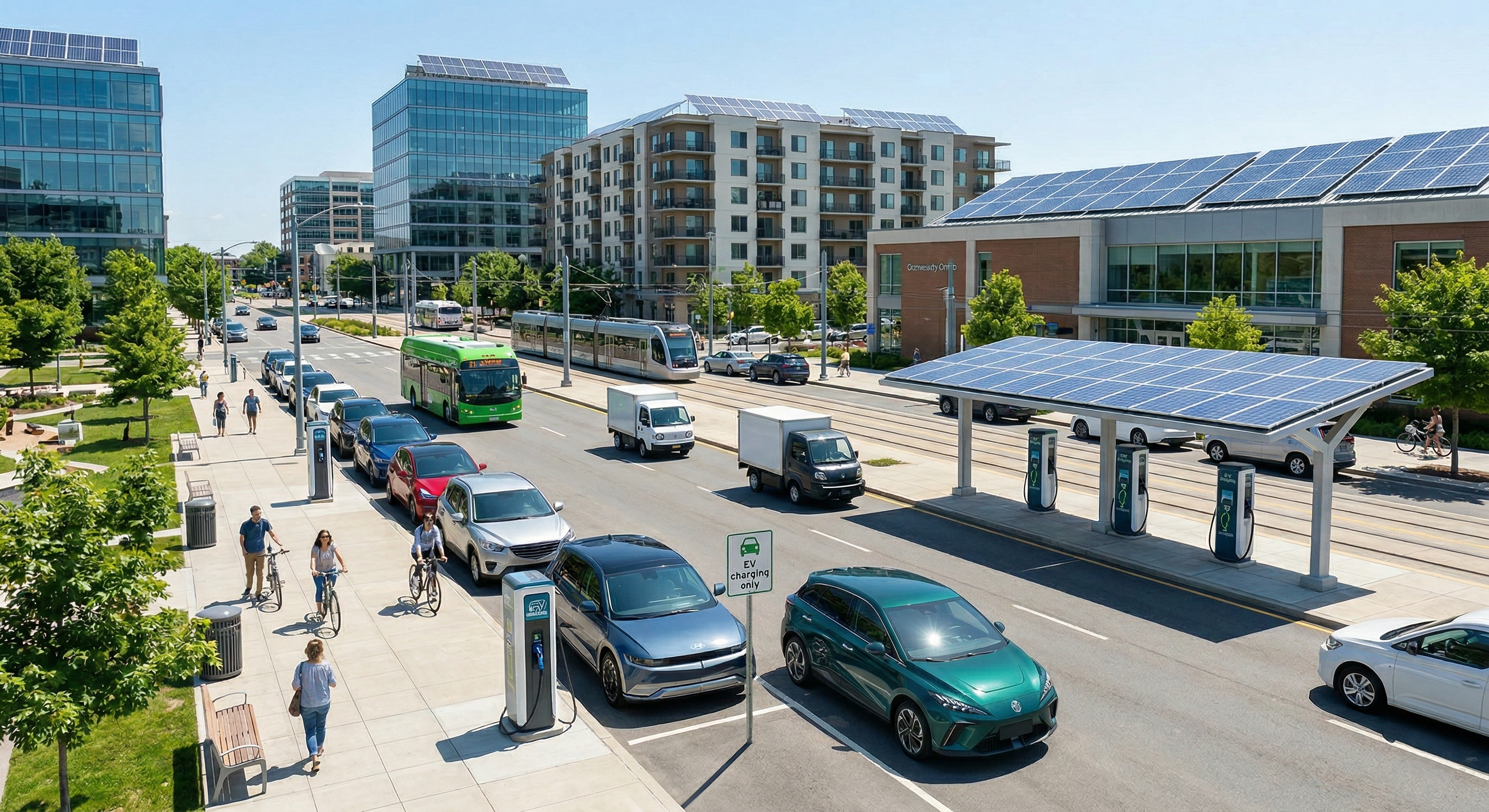
The Government of Canada announced $10.6 million for 14 EV charging infrastructure projects across the country at the EV & Charging Expo in Toronto. These projects are expected to install more than 1,600 chargers nationwide, with the stated goal of making charging infrastructure more accessible for families and businesses considering a switch to electric vehicles. The announcement links this investment to the federal government’s broader effort to support vehicle electrification and reduce barriers to EV adoption.
In addition to infrastructure funding, Natural Resources Canada is providing another $1.1 million to Plug’n Drive to continue a cross-country EV test drive tour. The release says the tour is intended to reach Canadians, especially those in small and medium-sized communities where EV adoption is lower, and to give them an opportunity to compare models, ask questions, and learn how EVs may fit their daily needs. This adds an awareness and education component to the federal strategy, complementing the physical buildout of charging networks.
The numbers in the release help show the scale of the federal approach. Beyond the newly announced funding, the government states that since 2016 it has invested more than $1.2 billion to support the deployment of EV chargers and hydrogen refuelling stations across Canada. In context, this week’s announcement is not a standalone measure but part of a continuing effort to support confidence in EV adoption through both infrastructure and public engagement.
3. Hydro-Québec Lowers the Barrier to Solar Self-Generation
Hydro-Québec has launched a new grant for residential and business customers who want to install solar panels. The grant provides $1,000 per kilowatt installed and covers up to 40 per cent of eligible project costs. According to the announcement, eligible solar projects can average between $5,000 and $6,000 for residential customers and approximately $45,000 for a business.
The company says the aim is to shorten the payback period for customers who want to become self-generators. The current payback period of 25 to 30 years is expected to fall to roughly 10 to 12 years under the new grant structure. That change is important because it directly addresses one of the main financial constraints on behind-the-meter solar adoption: the length of time required to recover the upfront investment.
The grant is part of Hydro-Québec’s wider solar strategy, which aims to integrate 3,000 megawatts of solar power in Québec by 2035. The announcement also notes that customers can opt into net metering and that the maximum self-generation capacity for this rate option has recently increased twenty-fold, from 50 kilowatts to 1 megawatt. Together, these changes show that Hydro-Québec is not only offering financial support but also adjusting the operating framework for larger-scale customer participation in solar self-generation.
Looking Ahead
These three updates point to a transition that is expanding at multiple levels of the energy system. Ontario is adding utility-scale renewable supply, the federal government is supporting transportation electrification through charging and public outreach, and Hydro-Québec is making distributed solar more financially viable for households and businesses. Each development addresses a different part of the transition, but all three are focused on enabling greater clean electricity use.
Another common thread is that the announcements are tied to practical deployment rather than broad targets alone. They include measurable capacity, funding, charger installations, grant formulas, and customer economics. That makes this week’s signals especially relevant for understanding how policy and program design are being translated into implementation across Canada’s energy landscape.
Stay Connected
Follow these developments closely as renewable procurement, EV infrastructure expansion, and customer-led solar investment continue to shape the next phase of Canada’s electricity transition.
👉 Connect with us on LinkedIn: Aotosys
References
-
CanREA–Ontario’s LT2 Energy Window 1 procurement goes all-in on renewables
https://renewablesassociation.ca/news-release-ontarios-lt2-energy-window-1-procurement-goes-all-in-on-renewables/ -
NRCan–Government of Canada invests in electric vehicles
https://www.canada.ca/en/natural-resources-canada/news/2026/04/government-of-canada-invests-in-electric-vehicles.html -
Hydro-Québec–Hydro-Québec announces new grant to accelerate solar self-generation
https://news.hydroquebec.com/news/press-releases/all-quebec/hydro-qubec-announces-new-grant-to-accelerate-solar-self-generation.html
