
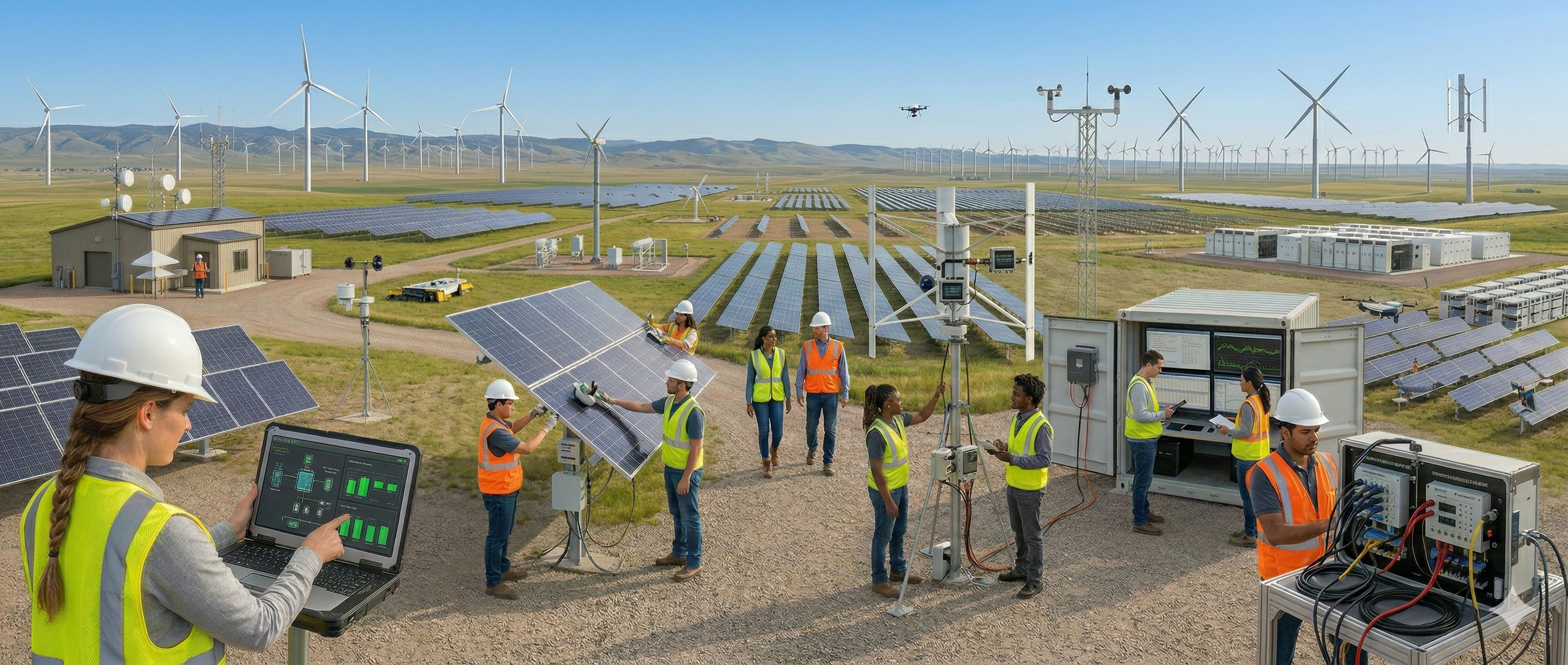
Renewable energy markets continue to demonstrate strong momentum across multiple technologies. This week’s developments highlight significant growth in U.S. battery energy storage, a major wind infrastructure project in Nova Scotia, and new research advancing solar land-use efficiency. Together, these updates reflect how innovation, capital investment, and smarter deployment strategies are accelerating the scale and effectiveness of clean energy systems worldwide.
1. Battery Energy Storage Accelerates Across the United States
The U.S. battery energy storage market is projected to reach approximately 70 GWh of deployments in 2026, signaling another record year for the sector. This follows a strong 2025, during which installed capacity exceeded 57 GWh, representing nearly 29% year-over-year growth. The rapid expansion underscores the increasing role storage plays in stabilizing grids and integrating higher volumes of renewable generation.
Utility-scale installations continue to account for the majority of capacity additions. Large-scale battery systems are being deployed to support peak demand management, reduce curtailment of renewable power, and improve grid reliability. States such as California, Texas, and Arizona remain leading markets due to high renewable penetration and strong demand for grid flexibility solutions.
At the same time, distributed and behind-the-meter storage systems are expanding, particularly in the residential segment. Storage paired directly with solar installations is becoming more common, enabling households and businesses to store excess generation and use it during periods of high demand or grid stress. This pairing strengthens energy independence while enhancing overall system resilience.
Investment levels in the storage sector remain substantial, with capital inflows projected to exceed $25 billion in 2026. Longer-term outlooks suggest annual deployments could surpass 110 GWh by 2030, further embedding battery storage as a foundational component of modern renewable energy infrastructure.
2. Nova Scotia Advances a 148.5 MW Wind Energy Project
In Atlantic Canada, renewable infrastructure expansion continues with the development of a 148.5 MW wind farm in Nova Scotia’s Mersey River region. The project will feature 33 turbines and is expected to generate enough electricity to power more than 50,000 homes, strengthening the province’s clean energy supply.
The wind facility is supported by structured financing designed to accelerate construction and long-term operation. Beyond clean power generation, the project is anticipated to create more than 200 construction jobs during peak development phases, contributing to regional economic activity while building renewable capacity.
Modern grid connection infrastructure is being integrated into the development to ensure efficient transmission of generated electricity. Strategic planning and collaboration between infrastructure investors and renewable developers are enabling the project to move forward efficiently while maintaining long-term operational reliability.
As wind power continues to scale globally, projects like Mersey River illustrate how utility-scale wind can provide dependable zero-emission electricity while supporting local workforce development and strengthening regional energy networks.
3. Research Highlights Opportunities for Smarter Solar Land Use
As solar deployment accelerates worldwide, researchers are exploring how photovoltaic (PV) systems can scale efficiently while optimizing land use. A recent study analyzed hundreds of utility-scale solar installations across the western United States using satellite imagery and spatial data modeling. The research quantified land footprints and established standardized benchmarks for energy output per land area.
The findings revealed that land-use intensity varies depending on site design, geographic conditions, and system configuration. By understanding these variables more clearly, developers can make better-informed siting decisions that improve land-use efficiency without compromising energy generation.
A companion global study assessed nearly 69,000 solar installations, comparing rooftop and ground-mounted systems across multiple countries. Rooftop solar systems demonstrated strong land-saving advantages by utilizing existing built environments, while ground-mounted facilities were shown to be capable of significant expansion when strategically located.
Together, the studies emphasize the importance of diversified deployment strategies. Combining rooftop integration, optimized spacing, and thoughtful site selection can support rapid solar growth while maintaining responsible land stewardship — ensuring solar energy expansion remains both scalable and sustainable.
Looking Ahead
Across storage, wind, and solar, this week’s developments reflect a broader trend: renewable energy systems are not only expanding in scale but also improving in efficiency and integration. Battery storage is strengthening grid reliability, wind projects are delivering dependable clean power at utility scale, and solar research is refining how land resources are used responsibly.
Looking ahead, continued technological innovation, investment, and strategic deployment will be essential to sustaining this growth trajectory. As renewable infrastructure becomes increasingly interconnected and optimized, the energy landscape is steadily evolving toward greater flexibility, resilience, and long-term sustainability.
Stay Connected
To stay informed on renewable energy trends and future weekly insights:
👉 Connect with us on LinkedIn: Aotosys
References
-
Energy-Storage.News –U.S. BESS deployments projected to increase to 70 GWh in 2026
https://www.energy-storage.news/us-bess-deployments-to-increase-to-70gwh-this-year-seia-says-in-first-sector-dedicated-report/ -
Canada Infrastructure Bank –Bringing jobs and more clean power to Nova Scotia
https://cib-bic.ca/en/medias/articles/bringing-jobs-and-more-clean-power-to-nova-scotia/ -
McGill University Newsroom –Making solar power’s land use more efficient
https://www.mcgill.ca/newsroom/channels/news/making-solar-powers-land-use-more-efficient-371486
